By LIME Logistics · · 7 min read
What transloading is
Transloading is the process of transferring freight from one mode or piece of equipment to another. The most common example in North American logistics is unloading an international ocean container at a facility near the port or rail ramp and reloading the freight into a domestic 53-foot dry van or another trailer for the rest of its journey.
Transloading also happens between rail cars and trucks, between flatbeds and enclosed trailers, and between bulk containers and smaller vehicles. In each case, the idea is the same: use the best equipment for each leg of the trip instead of forcing a single container to go door to door.
Why transloading saves money
The biggest savings come from equipment capacity. A 40-foot high cube ocean container holds roughly 2,700 cubic feet of freight, while a 53-foot domestic dry van holds roughly 3,800 to 4,000 cubic feet. That difference means freight from three ocean containers can often be consolidated into about two domestic trailers. On long inland moves, eliminating one out of every three truckloads adds up quickly.
Transloading also reduces equipment charges. When an ocean container travels all the way to an inland destination, the steamship line charges per diem or detention for every day it is out beyond the free time, and the trucker charges for the chassis. When the container is unloaded near the port and returned the same day or the next, those charges are minimized.
Finally, domestic trailers open up more carrier options. Many inland carriers do not haul ocean containers or do not have chassis, while almost every carrier in North America runs 53-foot dry vans.
How transloading helps with demurrage and detention
Demurrage is charged by the terminal when a container sits at the port beyond its free time. Detention or per diem is charged by the ocean carrier when its equipment is kept outside the terminal too long. These fees can easily exceed the cost of the freight move itself during periods of congestion.
Having a transload partner near the port gives you a release valve. If a consignee cannot receive a container right away, the freight can be pulled from the terminal before last free day, unloaded into a trailer or onto the warehouse floor, and the empty container returned. The freight is then delivered on the consignee’s schedule without the meter running on ocean equipment.
What cross docking is
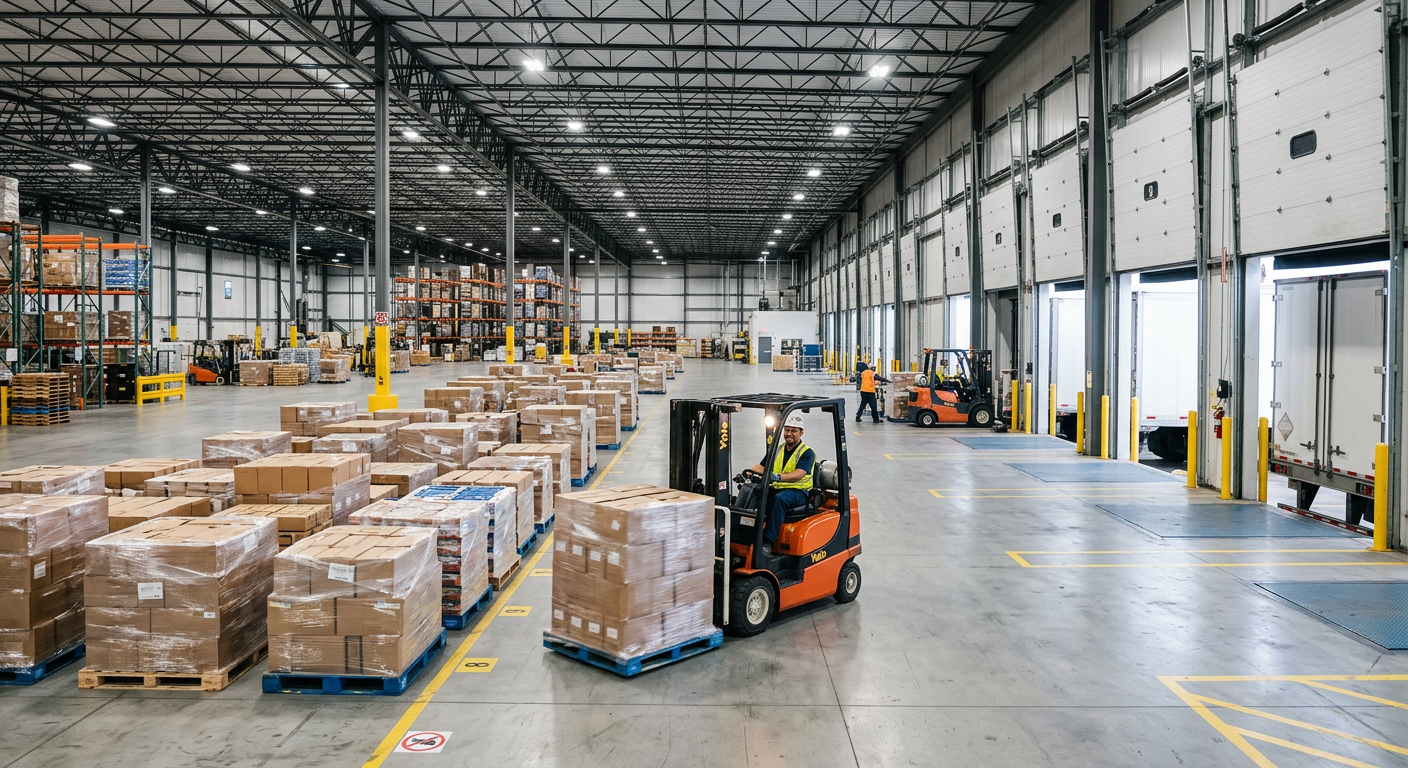
Cross docking is a fast-moving cousin of warehousing. Inbound freight is unloaded at one side of a dock, sorted, and loaded onto outbound trucks on the other side, typically within 24 to 48 hours. There is little or no long-term storage.
Cross docking works well when one inbound shipment needs to be split among several destinations, such as a container of mixed products bound for multiple retail distribution centers. It also works in reverse, consolidating smaller shipments from several suppliers into full truckloads headed to the same customer.
The main benefit is speed. Freight keeps moving rather than sitting on a shelf, and the shipper avoids the cost of putting product away and picking it again later.
Value-added services during transload
Because freight is already being handled, transload and cross dock facilities can perform useful work along the way. These services often save time compared with doing them at the final destination.
- Palletizing floor-loaded cartons so the freight can be handled with forklifts downstream
- Sorting by SKU, purchase order, or destination
- Labeling and relabeling for retailer compliance
- Inspection and photo documentation of condition on arrival
- Short-term storage while the consignee schedules delivery
- Building mixed loads for multiple stops
When direct container delivery makes more sense
Transloading is not the right answer for every shipment. If the destination is close to the port, the consignee can receive containers quickly, and the freight is heavy enough that a container already reaches its weight limit, a direct drayage move to the door may be simpler and cheaper.
Weight is an important consideration. A domestic 53-foot trailer is still limited to an 80,000 pound gross vehicle weight on most US roads, so very heavy freight may not benefit from the extra cube. In those cases, the savings from consolidation shrink, though transloading can still help with equipment charges.
Some products also require special handling or should not be touched more than necessary. Fragile, high-value, or sensitive goods may be better kept in a single sealed container from origin to destination.
Planning a successful transload program
Good transload programs start before the vessel arrives. Share packing lists and expected arrival dates with your logistics partner early so labor and dock space can be scheduled. Decide in advance how freight should be palletized, labeled, and loaded, and what documentation you need back, such as photos or counts.
It also helps to define the rules for exceptions. If a container arrives with damaged cartons or a count discrepancy, who should be notified, and should the freight be held or shipped? Clear instructions keep the process moving and protect your claims rights.
Transloading at rail ramps and inland locations
Transloading is not limited to seaports. Many import containers move inland by rail to major ramps such as Chicago, Columbus, Memphis, and Toronto before they are delivered by truck. Transloading near those inland ramps offers many of the same benefits: the container can be returned quickly, and the freight can continue to its final destination in domestic equipment.
Domestic transloading is also common between rail cars and trucks. Shippers of lumber, steel, plastics, paper, and other bulk or heavy products often move freight long distances by rail to a transload facility, then use trucks for the final miles to customers that do not have a rail siding. This approach combines the low cost of rail over long distances with the flexibility of trucking at the destination.
How to evaluate a transload facility
Not every warehouse is set up to transload efficiently. The best facilities are close to the terminal, have enough doors and labor to turn containers quickly, and can communicate clearly about what happened to every shipment. Consider the following when choosing a partner.
- Distance from the port or rail ramp, which affects drayage cost and turn time
- Number of dock doors and the ability to handle floor-loaded containers
- Labor availability during peak season
- Security, insurance, and inventory controls
- Reporting, such as photos, counts, and damage exceptions sent the same day
- Ability to provide storage when consignees are not ready to receive
A simple cost comparison
Consider an importer moving three 40-foot containers of light consumer goods from a port to a distribution center 800 miles inland. Delivered directly, that is three separate container moves, each with chassis charges and per diem for the days the container is out, plus the cost of returning the empty container to the port.
With transloading, the containers travel a short distance to a facility near the port, the freight is consolidated into two 53-foot trailers, and the empty containers are returned the same day. The importer pays for transload labor, but saves one full long-haul truckload and most of the equipment charges. On light, high-cube freight moving long distances, the savings are often significant.
Transloading and warehousing with LIME Logistics
LIME Logistics offers transload, cross dock, palletizing, and storage services alongside our intermodal drayage. Because we service all ports and rail ramps in the United States and Canada, we can pull a container, transload it, and deliver the freight in domestic trailers as one coordinated move.
If you are paying detention on containers or moving freight inland in ocean equipment, we can review your lanes and show where transloading may reduce your costs. Request a quote or call us at (716) 815-7172 ext. 101 to get started.
Frequently asked questions
Is transloading the same as warehousing?
Not exactly. Transloading focuses on moving freight from one piece of equipment to another, often the same day. Warehousing involves longer-term storage. Many facilities offer both.
How many 53-foot trailers equal three 40-foot containers?
By volume, freight from three 40-foot ocean containers typically fits into about two 53-foot domestic trailers, depending on the product and how it is packed.
Does transloading increase the risk of damage?
Any extra handling adds some risk, but experienced facilities minimize it with proper loading, palletizing, and inspection. The equipment savings usually outweigh the risk for durable freight.
- Transload
- Warehousing
- Intermodal